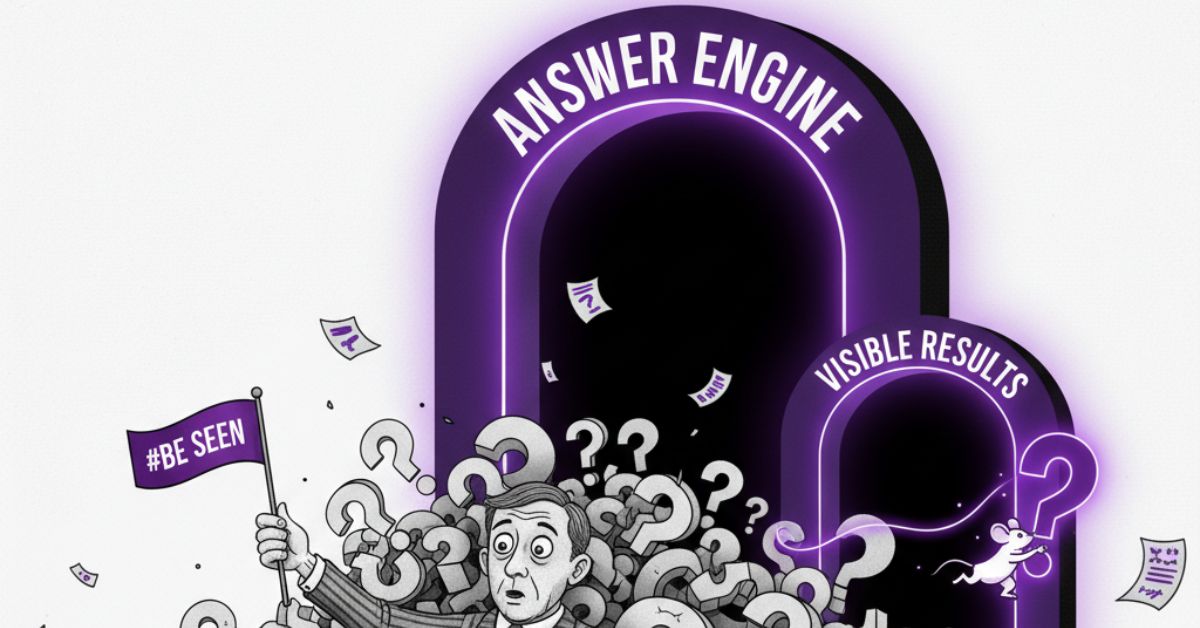
We’ve all heard the scary bedtime stories in digital marketing: “Once upon a time, a brand didn’t adapt to SEO changes… and they were never found again.” Cue the thunder and spooky music. Well folks, the bogeyman’s got a new name, and it goes by Answer Engines.
Search engines? Sooo 2020. Today, AI-powered Answer Engines — things like Google’s SGE (Search Generative Experience), Bing AI, and even ChatGPT — are stepping in with direct, conversational answers to users’ questions. That’s great for convenience, but for businesses? It’s a digital game of hide-and-seek that they’re losing… badly.
Wait, What Exactly Is an Answer Engine?
Imagine asking your friend, “What’s the best sushi place near me?” and instead of them pulling up a list of Yelp reviews, they just say, “Try Sushi Samurai on Main Street. It’s got great reviews and is open right now.”
That’s what answer engines do — they skip the 10 blue links and go straight to THE answer. No clicking, no scrolling, no browsing. Just… answers, instantly.
And if your brand isn’t part of that answer? You’re basically invisible.
The Shift: From Search Results to No Results
Once upon a time in the golden age of SEO, ranking on page one of Google was the Holy Grail. But with answer engines taking center stage, the whole dynamic is shifting from search results pages to zero-click answers. That means:
- Fewer people click through to your website
- More users get their answers without ever seeing your brand
- Your beautifully crafted content might never see the light of day
It’s like throwing a party, spending weeks organizing it, lighting the disco ball… and nobody shows up because the invitation got intercepted by an AI.
What’s at Stake? (Spoiler: Everything)
Let’s not beat around the digital bush here. If your business isn’t showing up in answer engines, you’re risking:
- Brand Visibility: Out of sight, out of mind — literally. If you’re not in the AI’s answer, you may as well not exist.
- Traffic Loss: Fewer clicks from search engines means less organic traffic to your site. That’s fewer leads, fewer sales, and fewer celebratory cake days.
- Revenue Impact: Less visibility = fewer conversions = dipping ROI = nervous glances at the marketing budget.
The kicker? You might actually be helping the AI answer people’s questions — and still not get any credit. Answer engines scrape data from content like yours to build those snazzy, summarized answers. So your content is good enough to be used, but not good enough to earn you a click. Ouch.
Answer Engines: The New Black Box
Trying to understand how these answer engines choose what to show is like trying to read tea leaves in the dark. Unlike traditional search rankings, where you could analyze SERPs, track clicks, and optimize for keywords, answer engines operate behind a curtain of machine learning and unicorn dust.
They decide what answer is “best” based on a mix of:
- Relevance
- Authority
- Freshness
- Intent matching
But there’s no definitive dashboard, no Search Console, barely even a trail of breadcrumbs. It’s SEO meets the Bermuda Triangle.
So, How Do You Survive the AI-Pocalypse?
Alright, enough doom and gloom. Let’s talk survival tactics. If you want to stay visible in the age of AI answer engines, you’ve got to evolve your SEO strategy — and fast.
1. Optimize for Conversational Queries
Answer engines are all about natural language. That means shifting your content to match how people actually talk, not just how they search.
- Use full questions as headers (like “What’s the best dog food for large breeds?”)
- Write in a conversational tone — think FAQ, not academic paper
- Target long-tail keywords and semantic variants
Remember: if your content sounds like something an AI would confidently repeat to a human, you’re on the right track.
2. Embrace Structured Data (Schemas FTW)
AI loves structure — and adding schema markup to your site helps machines understand your content better. Use structured data for:
- Products
- FAQs
- Reviews
- Local business info
Pro Tip: Implement schema with JSON-LD, and test it with Google’s Rich Results Test. It’s like giving AI a cheat sheet to your content.
3. Build (Real) Authority
Authority has always mattered, but now it’s table stakes. Answer engines want content from voices they trust — so invest in:
- Expert-driven content (hello, E-E-A-T!)
- High-quality backlinks from relevant sources
- Clear author bios and sourcing
If your site reads like it was written by a sleep-deprived intern using ChatGPT 3.0, don’t expect to make the cut.
4. Monitor and Adapt Constantly
You’ll need to get creative with tracking. Since traditional click-through metrics might dry up, look at:
- Brand mentions
- Engagement metrics on owned channels
- Referral traffic from AI platforms (if available)
- Changes in search visibility and impressions
Also, keep your finger on the pulse of what platforms like Google and OpenAI are launching. These platforms change faster than a TikTok trend — and early adopters tend to win big.
5. Create First-Party, Highly-Useful Content
Generic fluff is out. Content that’s unique, helpful, and rooted in first-hand experience is in. Think:
- How-to guides based on real use cases
- Product demos and case studies
- Interactive tools and data visualizations
Give answer engines something they can’t get from Wikipedia. Be the original source that sets the record straight.
Bonus Round: Should You Feed the Beast?
Some marketers are considering a bold move: directly optimizing for AI platforms, or even feeding data into them. Think of it like buying the AI a coffee and saying, “Hey, next time someone asks about best CRMs for small business, don’t forget me.”
Options include:
- Publishing API-accessible data
- Submissions to knowledge graphs and data partners
- Testing AI-focused content formats (like summaries and lists)
Just don’t rely on this alone. Remember, feeding the AI doesn’t guarantee it’ll mention your brand. It might just take your info and ghost you. Classic machine behavior.
The Takeaway: Don’t Get Ghosted by AI
Answer engines aren’t the enemy — they’re just the next evolution of search. But if your brand isn’t adapting, you may find yourself in the digital equivalent of purgatory: out there, but never seen.
So here’s your battle plan:
- Get serious about conversational content
- Leverage structured data like a pro
- Focus on credibility and authority
- Watch, learn, and pivot
The world of search is changing fast, but the goal remains the same: be the answer. Just make sure the AI knows it’s you.
Because when it comes to visibility in the age of answer engines, it’s simple: Be seen… or be forgotten.